
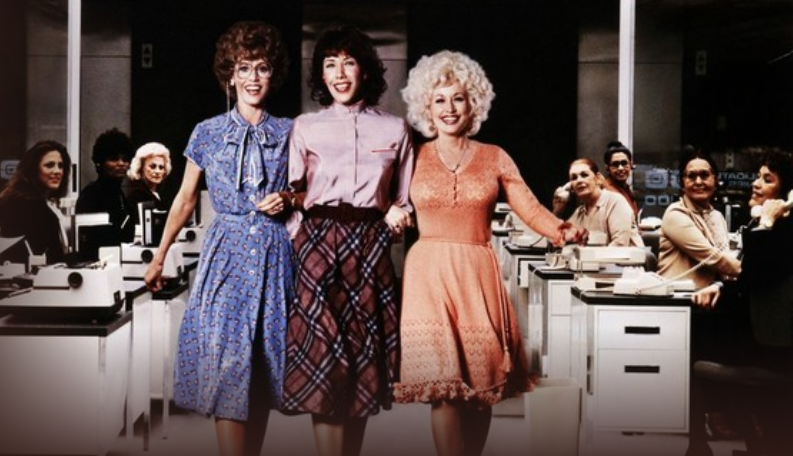
I was in 5th grade when I memorized every word of the Dolly Parton song, 9 to 5. I sensed the cheery anthem was about feminine power. Little did I know the song and the movie foretold the challenge that lay ahead for Gen X women like me carrying the baton of “we can do it all” feminism. As the second highest grossing movies of 1980 (after The Empire Strikes Back); the questions it raised about that new era resonated deeply with America and continue to reverberate today.
Like the women in 9 to 5 the film, I entered the workforce as a secretary, working for executives in marketing, medical and communications. All worlds where women like me worked for men higher on the org chart. Even as my dream jobs had me working for architects and developers, I didn’t expect any different. I kept my head down and did what I was told until I couldn’t, never considering how I could innovate my job to stay. I quit and started my first business.
By the end of the movie, Lily Tomlin's character Violet finally gets the promotion she always deserved as recognition for family-friendly innovations those plucky broads implemented while their sexist boss was literally tied up at home. Today women occupy 29% of corporate leadership roles, and some of those innovations are now the norm. I wonder: What are the workplace innovations waiting to be implemented over this next era?
If you have a corporate job where you wish your job could be a little easier, maybe you are the key to enacting one of those innovations needed for work in the next era. How would you remove friction from your job, allowing you do it better or more efficiently? What stops you from making those changes? Follow these steps to build your changemaking strategy:
Name the exact changes you want to see.
What steps are needed to implement the changes that fall within your purview?
If you need buy-in from others, where do their interests overlap with the changes you’re proposing?
Go / No-go: What difference would those changes make for you and others?
What is the impact of not pursuing those changes?
Make a decision and stick to it.
I want workplaces to be better for collective human fulfillment, but more importantly I want you to be happy wherever you work right now. Being an innovator is not easy, but neither is continuing to show up to a job you know should be done differently. This is the true source of BURNOUT.
Ok, here’s where I want to hear from you: What’s the change you’d want to see in your workplace, and what stops you from implementing them?